Redefining Philanthropy through Holistic Social Empowerment.
LOVAH finances and strengthens Strategic Local Alliances of NGOs delivering holistic, rights-based support to children and youth aged 0–25 across Asia.
An ecosystem that empowers social organizations to make the most vulnerable sustainably independent.
We act as a catalyst, a pivot, an escalator, and a connector for holistic support of the beneficiaries supported by the organisations we partner with.
By fostering global connections between these entities, we strive to amplify their collective reach for a lasting positive impact. We audit, advise, equip, support and connect medium-size social organisations with life-long partnership.
We picture a landscape where local NGOs are not competing for the same short grant cycles, but standing together in Strategic Local Alliances strong enough to hold a child's full journey from birth to independence.
We do this through a structured 70/30 model — financial grants paired with structure capital — grounded in the UN Convention on the Rights of the Child and its General Comment No. 12 on the child's right to be heard.
70% financial grant. Capital that flows directly to the alliance's frontline programs — the shelters, the case workers, the school fees, the therapy sessions. This is the part that keeps a child fed, housed, and safe this month.
25% structure capital. Investment in what makes an alliance durable: shared case-management systems, joint fundraising capacity, staff training, financial controls, and the governance needed to satisfy institutional donors. This is the part that means the alliance is still standing in five years.
5% LOVAH administrative cost. Covers the running cost of LOVAH itself as the alliance manager — the oversight, due diligence, and coordination work that keeps every alliance accountable.
We designed the split this way because we watched alliances during our own field research that had one or the other — funding without structure, or structure without funding — and neither survived intact.
An alliance holds two kinds of coordination at once: it hands a child off smoothly from one age-appropriate NGO to the next as they grow, and at any single point in that journey, several complementary NGOs are supporting them simultaneously. Both are true of every Strategic Local Alliance we fund.
No child is dropped at a birthday. One shared case file follows them from early years through to independence, even as which NGO leads their care changes.
Not one NGO doing everything for a child — one running health services, another education, another foster care, another protection, all active together, coordinated as a single alliance.
Our founders spent six months on the ground across South and Southeast Asia before writing the first page of the LOVAH model, culminating at the Philanthropy Asia Summit 2026 in Singapore.
Mapped existing NGO networks, identified critical coordination gaps, and initiated the validation of donor requirements.
Between January and June 2026, our founding team visited eight South and Southeast Asian countries and met with 32 NGOs and donors before setting this sequence.
LOVAH is built as two entities so that management expertise can be paid for like the professional service it is, while every dollar donors give moves through a vehicle that distributes nothing to shareholders.
Incorporated in Singapore as the paid Alliance Manager: it designs the Strategic Local Alliance model, structures the 70/30 funding, and provides the management consultancy and training that hold alliances together.
A separate, non-distributing vehicle that receives donor grants and channels them to Strategic Local Alliances, kept apart from the Alliance Manager so that institutional donors can see exactly where their capital goes.
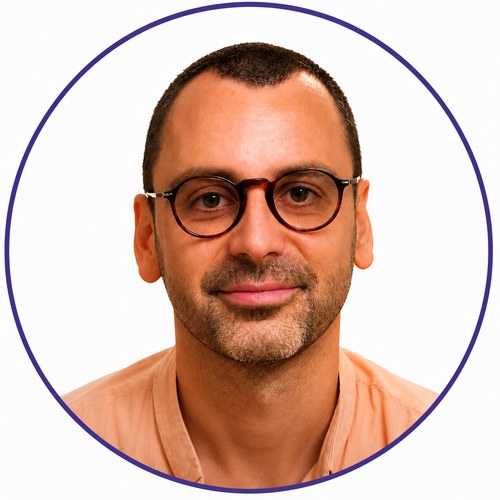
Trained as a QHSE engineer at ESAIP France, with a career built across compliance systems (ISO 9001, OHSAS 18001), multi-site operations management in Angola and Gabon, sales leadership, family business management, and staff training delivery.
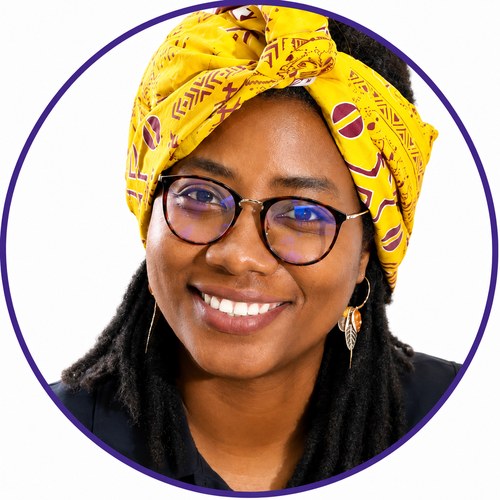
A decade of corporate finance leadership at DHL Global Forwarding across Central Africa, the UK, and South Africa, holding a First Class degree in Business Administration and Accounting and ACCA foundation papers, alongside earlier nonprofit board experience at AIESEC.